Samik Krishnan
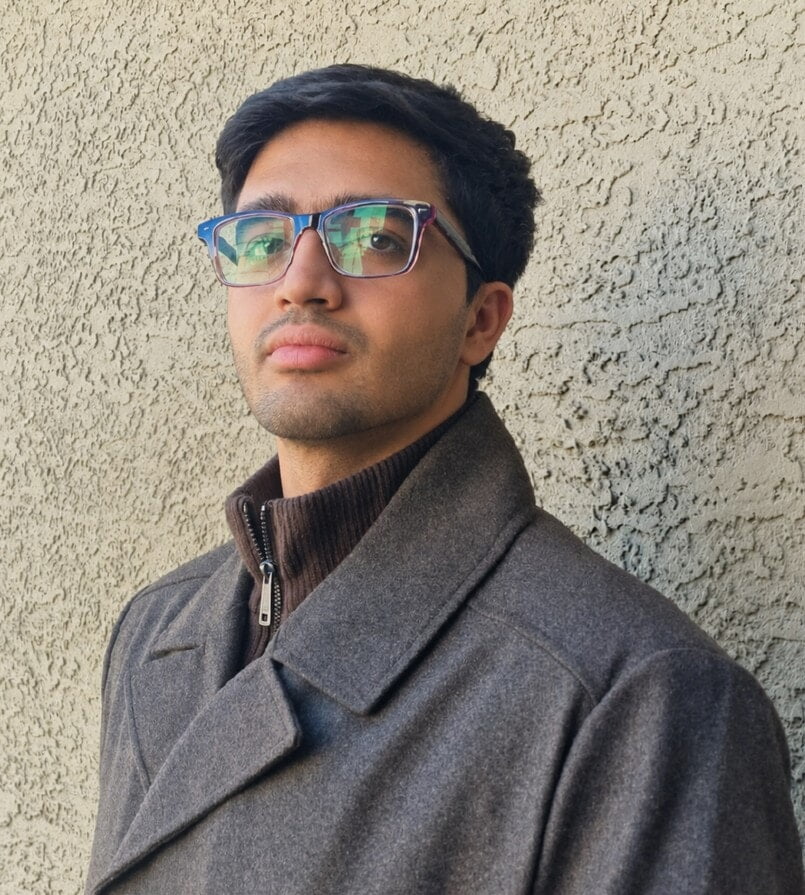
Samik Krishnan is a Nuclear Engineering and Chemical Engineering student at UC Berkeley (Class of 2028) with a strong interest in reactor thermal-hydraulics, particularly natural circulation and passive cooling systems in advanced nuclear reactors. His interests also include nuclear materials, nuclear physics, fission systems, and DT-generator technology. His work spans both the mechanical and software aspects of nuclear and energy technologies, including the development and analysis of natural circulation systems, mechanical and software development for DT-generators, and research involving nuclear materials.
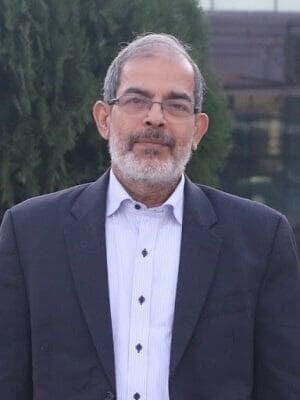
Vijayan Krishnan
Prof. Vijayan Pallippattu Krishnan is a nuclear engineer and internationally recognized expert in reactor thermal hydraulics, passive safety systems, and natural circulation in advanced nuclear reactors. He earned his Ph.D. in Energy Systems Engineering from IIT Bombay. He spent over four decades at the Bhabha Atomic Research Centre (BARC), where he served as Head of the Reactor Engineering Division and Director of the Reactor Design & Development Group, leading research on reactor thermal hydraulics and advanced reactor design. After his retirement, he joined as a visiting professor at Indian Institute of Technology Jammu where he served as Dean, Research & Consultancy, Dean, International Relations and Dean Admin. He is currently a Professor in the School of Mechanical Engineering at Manipal Institute of Technology, Manipal Academy of Higher Education (MAHE) and also serves as an Adjunct Professor at the Department of Chemical Engineering, IIT Jammu. He has authored more than 300 research publications and the widely referenced book Single-Phase, Two-Phase and Supercritical Natural Circulation Systems (2019). His research has significantly advanced the understanding of natural circulation, computational heat transfer, and passive safety technologies for next-generation nuclear reactors. His contributions continue to influence reactor design and thermal-hydraulic analysis in both academia and the nuclear industry worldwide. He also worked as a guest scientist at GRS, Garching, Munich, and IAEA, Vienna. Participated in several international and bilateral research projects like Indo-Italian, Indo-UK, AERB-USNRC and several IAEA coordinated research projects. He has won several awards like Homi Bhabha Science & Technology Award, Raja Ramanna Fellowship, and is included in the world's top 2% of scientists in the energy domain compiled by Stanford University.